Frequently Asked Questions
Straight answers about functional blood chemistry, hormone balance, and what working with Michelle Hernandez actually involves. If your question isn't here, the discovery call is the place to ask it.

My doctor says my labs are normal. Why do I need this?
"Normal" in conventional medicine means your results fall inside a range built by comparing you to a large population — one that includes many people who are sedentary, aging, or already metabolically compromised. It tells you whether you have crossed a threshold for disease. It does not tell you whether your body is working the way it should. Functional blood chemistry compares those same results against optimal reference ranges: the values associated with how a body actually performs, not merely whether it clears a disease cutoff. The gap between normal and optimal is where most midlife symptoms live — the fatigue, the 3am waking, the weight that will not move despite an unchanged routine. Michelle Hernandez is a Board Certified Nutritional Endocrinology Practitioner and reads labs through that optimal lens, then explains what the pattern means in plain language. This is educational interpretation of your existing data, not diagnosis or medical advice.
How is this different from what I have already tried?
Most programs, including many marketed as functional medicine, are built around population averages. They hand you a plan designed for the median client and hope it fits closely enough to work. When it does not, the assumption is that you did not follow it well enough. This approach starts from the opposite end: your functional blood chemistry, your genetic profile, and your own real-time biometric patterns. The recommendations you leave with are built around your specific biology rather than an average you were never close to matching. There is no template. There is what your data actually shows, and a prioritized list of what to address first. Michelle's background in Health IT and systems analysis is central to how this works — she approaches health the way a systems analyst approaches a complex dataset: find the signal in the noise, identify the highest-leverage changes, and eliminate everything that does not matter.
Will I have to overhaul my diet and lifestyle?
No. The goal is to build on the life you already have rather than dismantle it. You will not be handed a meal plan that makes you the difficult one at every dinner table, or a schedule that requires you to become a different person before you are allowed results. Many people arriving here have already paid that cost — the Sunday meal prep, the declined invitations, the rules that reorganized their week — and got very little back for it. What you get instead is a precise understanding of what your specific body needs. In most cases the changes that make the biggest difference are far more targeted, and far less disruptive, than what you have already attempted. Less overhaul, more precision. The programs are designed to work alongside an existing career, family, and social life rather than competing with them.
How much time does this actually take?
This is designed for people whose time is not negotiable. The process is coordinated so you are not running between providers, managing your own referrals, or spending hours becoming your own researcher. What you invest upfront — the initial consult, the data collection, the onboarding — is returned in the time you stop spending on approaches that are not working. One coordinated process replaces the patchwork. Most people find it takes less time than the cobbled-together approach they were already managing alone: the podcasts, the forums, the supplement research, the appointments that never connect to each other. Sessions are scheduled around an existing career and family life rather than assuming either can be rearranged. Michelle's background in Health IT and systems analysis is why the process is structured this way. The efficiency is deliberate, not incidental.
What if it does not work for me the way it has for others?
That concern makes complete sense, particularly if you have invested in something before that did not deliver. The emotional cost of that history is as real as the financial one. Here is what is different: this is not a one-size-fits-all program where results depend on how closely you match an average client. It is built around your data. If something is not working, it shows up in your numbers and the plan is adjusted. You are not left alone to execute a protocol and wonder what went wrong. The process is responsive, which means the answer is never "try harder" — it is "let us look at what your data is telling us and recalibrate." No practitioner can promise a specific outcome, and anyone who does is guessing. What can be offered is a process built around your specific biology, reviewed as you go.
I have already spent a lot on my health. How do I justify this?
You have not been failing. The approaches have been failing you. Generic programs, disconnected specialists, supplements recommended without data — none of that was built around your specific biology, which is why none of it delivered what you hoped. The question is not whether to invest in your health. You have already been investing, often for years, in co-pays, specialist visits, programs, and supplements that were never coordinated with each other. The question is whether to keep investing in approaches that were not built for you, or to invest once in one that is. Many people find that what they spend here replaces what they were already spending on things that were not working, rather than adding to it. It consolidates the spend rather than increasing it. Working through what you are currently spending, and on what, is a reasonable part of the discovery conversation.
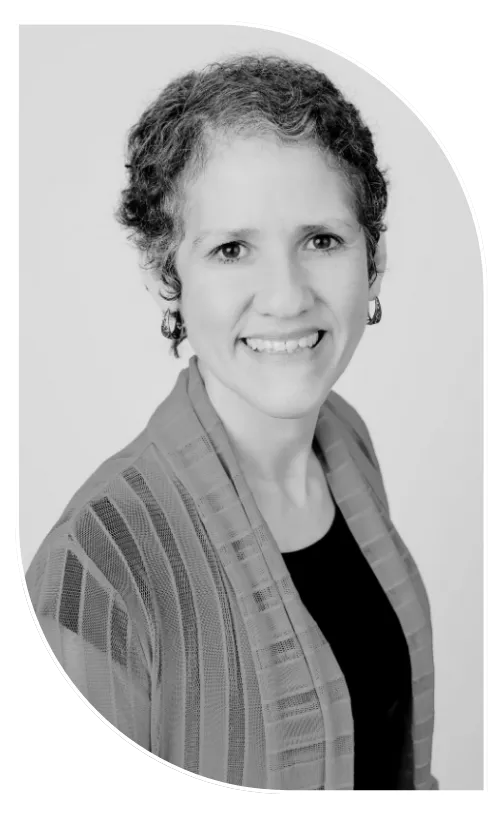
Still have a question?
Every situation is different, and some questions only make sense once we are looking at your actual data. A 45-minute discovery call is where those get answered - no obligation, and no charge.